Botox marketing for med spas
Botox marketing that brings patients back every 3 to 4 months
Good Botox marketing wins the first visit at a low cost, then gets the patient back on schedule every cycle. We run the ads, answer every lead in seconds and build the rebooking system in GoHighLevel, so neurotoxin patients keep returning to your clinic instead of the one with this week's deal.
Neurotoxin, across the clinics our team measured
Median cost per paying neurotoxin patient from Meta ads, after follow-up was fixed
Patients returning on schedule after treatment-cycle rebooking (49 clinics)
Median 90-day return on neurotoxin ad spend
The problem
Most Botox marketing stops at the first appointment
A neurotoxin result fades in roughly three to four months. That makes every new patient a repeat booking, if someone asks them back. Most Botox marketing ideas online stop at the lead: post before-and-afters, run a promo, try an influencer. The money leaks after that.
Cheap leads go cold fast
Neurotoxin leads cost less than most treatments, so clinics treat them as disposable. Across 186,400 leads in our team's data, people who got a reply in under a minute booked at 41%. After 4 to 24 hours, it was 9%.
Patients drift between cycles
Without a rebooking prompt, patients wait until the result is long gone. Then they book wherever has an opening or a promo.
Discounts attract the wrong patients
In our team's data, deeper discounts cut cost per lead by 12%. But close rate fell 9 points and repeat rate fell 14 points.
Our neurotoxin data
What neurotoxin leads do once follow-up is fixed
Neurotoxin took 27% of Meta ad spend across the clinics our team tracked, more than any other treatment. Here is the median neurotoxin campaign after follow-up was fixed, next to the median across all treatments.
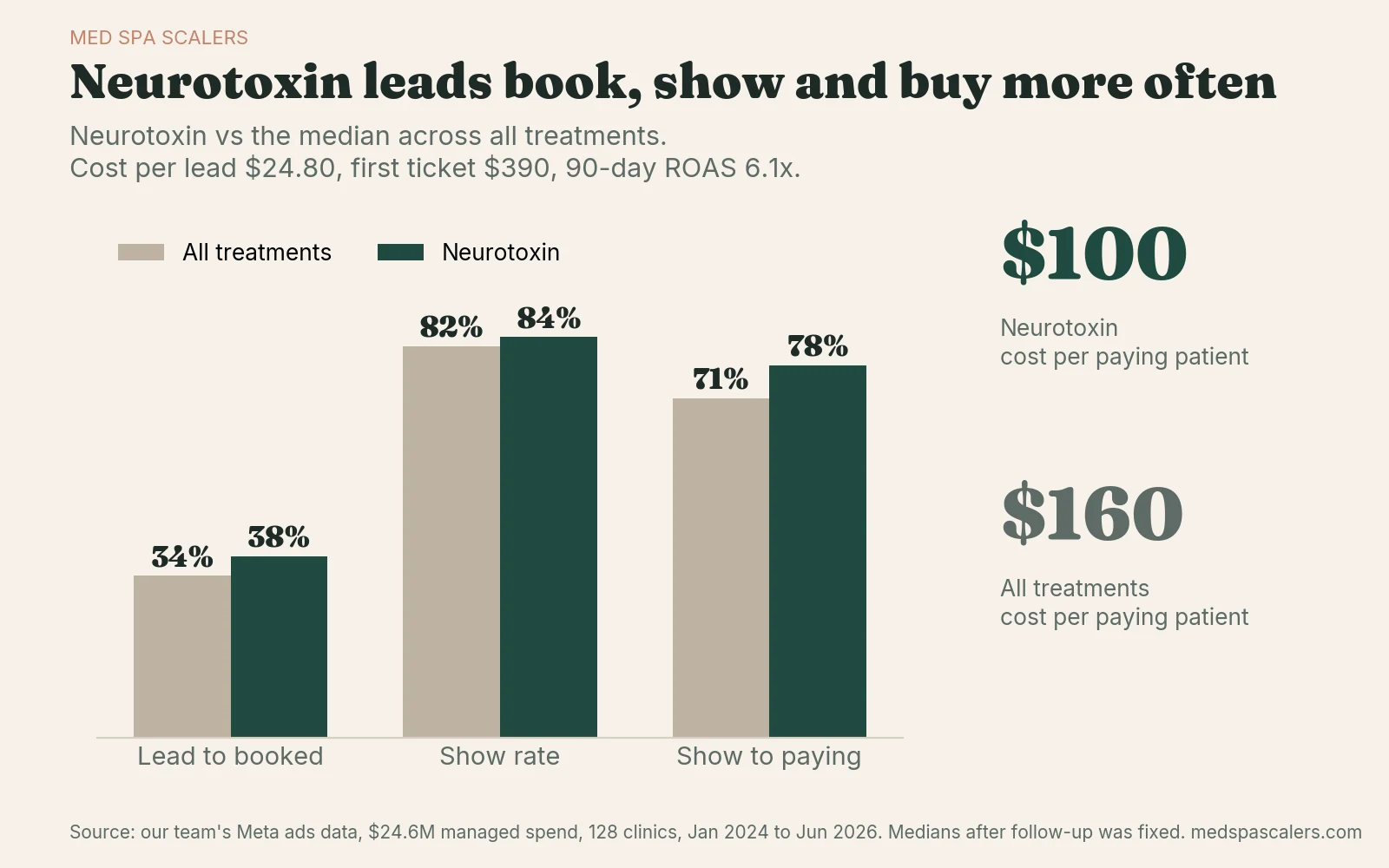
The median first neurotoxin ticket was $390, and 90-day return on ad spend was 6.1x. A first ticket that size pays best when the patient comes back, which is why the rest of this page is about the second, third and fourth visit.
Methodology: before = a clinic's first 90 days, after = months 4 to 6. Figures are medians across clinics, January 2024 to June 2026. Full method and limitations are in our med spa speed-to-lead study.
The playbook
Botox marketing ideas that hold up in the data
Lead with price per unit, not percent off
Patients compare toxin by the unit. In our team's tests, per-unit framing ("$11/unit") lifted click-through rate from 1.1% to 1.7% against a "20% off" offer. Use your own per-unit price.
Put your injector on camera
UGC and provider-on-camera ads cut cost per lead from $46.10 to $29.80 against polished stock. A short clip of your injector explaining a first visit beats a stock face.
Answer every lead in under a minute
A text goes out within seconds and a call follows. After hours, an AI receptionist for your med spa answers and books, so a cheap lead doesn't go cold overnight.
Rebook on the treatment cycle
Book the next visit at checkout, then send reminders as the date your provider sets gets close. Across 49 clinics, on-schedule returns went from 41% to 63%, adding a median $22,600 in the first 90 days. Setup takes about a day.
Give patients a reason to stay
A membership or treatment plan keeps patients with you between cycles. You set the terms. We build the sign-up, renewal reminders and plan tracking in your CRM.
Protect the show rate
Reminders at 72 hours, 24 hours and 2 hours, confirmed by reply, lifted show rate from 61% to 78% (77 clinics). No-show recovery raised rebooking within 14 days from 9% to 38%.
How we build it
How we set up neurotoxin ads and rebooking
Audit your toxin numbers
We check your cost per lead, response time, show rate and how many toxin patients return within four months. That shows whether ads or retention is the bigger gap.
Launch ads and follow-up together
Our ads partner runs Meta and Google campaigns with per-unit framing and provider creative. Every lead lands in GoHighLevel and gets a text within seconds.
Build the cycle
We add checkout rebooking, cycle reminders, membership renewals and review requests. You get a monthly report on booked consults and returning patients.
Case study
Lumiere Aesthetics: toxin and filler, full system
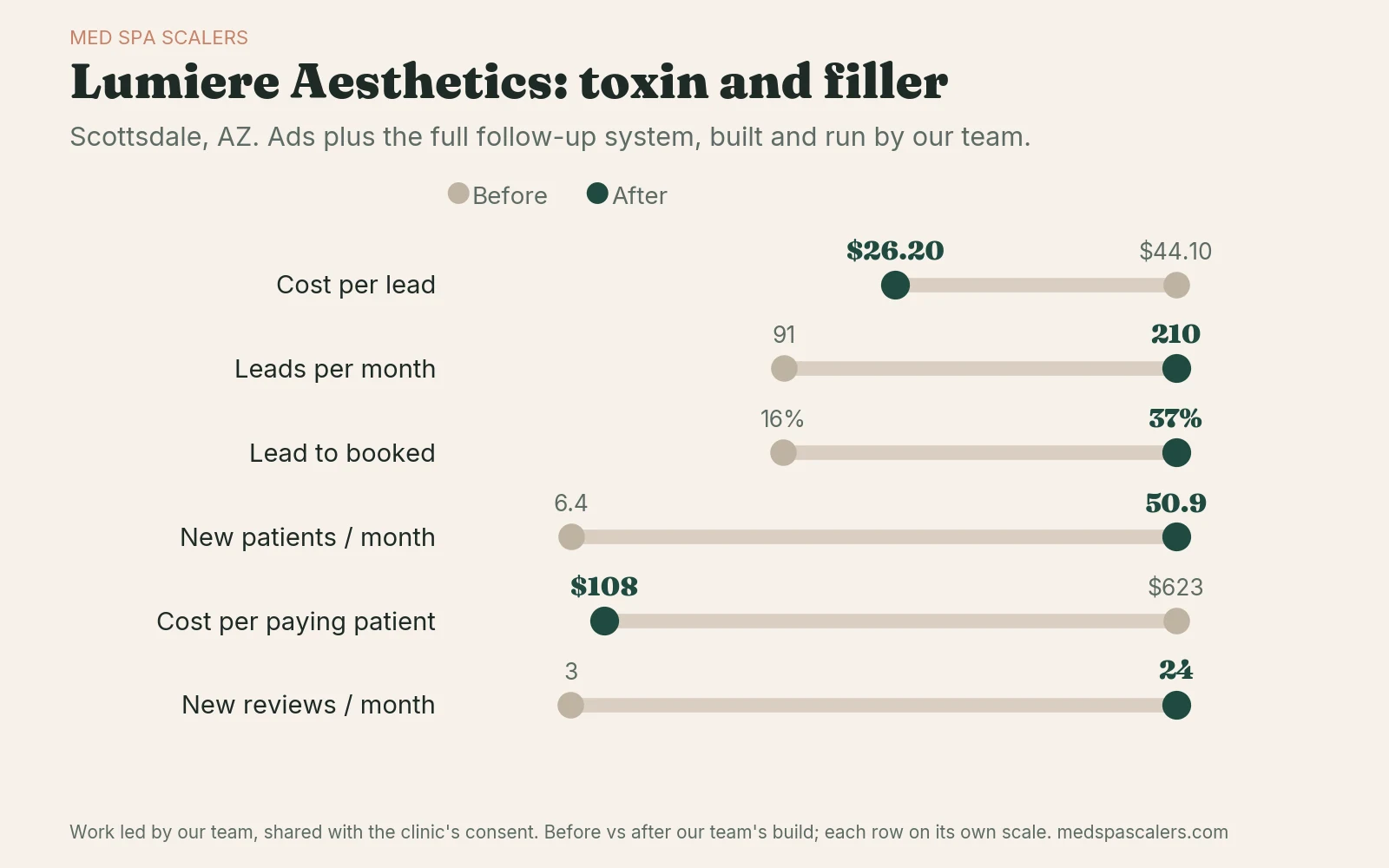
Lumiere Aesthetics is a toxin and filler clinic in Scottsdale, Arizona. Our team ran the full stack: ads, CRM, speed-to-lead, reminders and reviews. This was work led by our team, shared with the clinic's consent.
Lead volume more than doubled. The bigger change came after the lead: response time dropped from over six hours to 38 seconds, and cost per paying patient fell from $623 to $108.
Where it fits
Neurotoxin marketing feeds the rest of your menu
Toxin is often the first treatment a patient tries. A patient who trusts your injector is the easiest person to offer filler, so we pair this system with dermal filler marketing for clinics that do both. The same follow-up runs for semaglutide marketing, body contouring marketing and laser hair removal marketing.
For channel detail, see how we run med spa Facebook ads. Google search campaigns and budgets are covered on our med spa advertising page. Rebooking, reminders and reactivation all live in your med spa CRM.
As a med spa marketing agency, we run the ads and the follow-up together, and we report on booked consults and returning patients, not clicks.
Compliance
Botox advertising rules to know
- Meta's health and wellness policy requires ads for cosmetic procedures to target people 18 and older, and bans statements that attack how someone looks. Before-and-after images are allowed only with 18+ targeting.
- Botox, Dysport, Xeomin and Daxxify are brand names owned by their manufacturers. Use them accurately and don't imply a partnership you don't have.
- Testimonials and before-and-afters must reflect real patients' experiences, and any incentive for a review must be disclosed. See the FTC Endorsement Guides.
- Avoid guaranteed results and medical claims in ads. State rules on who can inject and how injectables are advertised vary.
This is a summary, not legal advice. Check your ads with your medical director or compliance advisor.
FAQ
Botox marketing questions
What is Botox marketing?
Botox marketing is how a med spa attracts and keeps neurotoxin patients: ads and local search to win the first visit, fast follow-up to book the lead, and rebooking every few months so patients return on schedule.
What are the best Botox marketing ideas for a med spa?
In our team's data, the ideas that moved results were per-unit price framing in ads, provider-on-camera creative, replying to leads in under a minute and rebooking patients on their treatment cycle. Deep discounts brought cheaper leads but fewer repeat patients.
Should I advertise Botox by price per unit or by discount?
In our team's tests, per-unit price framing lifted click-through rate from 1.1% to 1.7% compared with a percent-off discount. Deeper discounts also lowered close and repeat rates.
Can I run Botox ads on Facebook and Instagram?
Yes, within Meta's rules. Ads for cosmetic procedures must target people 18 and older, and they can't make negative statements about how someone looks. Only use patient photos and reviews with consent.
How much does Botox marketing cost?
It depends on your market, ad budget and which parts of the system you need. We share exact pricing after a free audit.
See how many patients you're leaving on the table
Get a free marketing audit of your ads, follow-up and booking flow. No pressure, just a clear picture.
Book a free marketing audit