Dermal filler marketing for med spas
Dermal filler marketing that books consults, not just clicks
Filler patients buy trust before they buy a syringe. They want to know who injects and whether it will look overdone. We run filler ads on Meta and Google, answer every lead in seconds and build the consult follow-up in GoHighLevel.
Filler in our team's data (medians)
Cost per paying filler patient from Meta ads, vs $100 for neurotoxin
Median first filler ticket, vs $390 for neurotoxin
Unsold consult attendees who bought within 30 days, after automated follow-up (42 clinics)
The problem
Why filler leads are harder to close than Botox leads
Filler is a bigger decision. The result is visible, it lasts for months, and most people have seen a lip result they don't want. In our team's data, filler leads booked at 31% against 38% for neurotoxin, and closed at 69% against 78%.
The fear is the mirror
People worry less about the needle than about looking overdone. A price-only ad doesn't answer that.
The provider is the product
Patients choose an injector, not a brand. Ads that hide the provider leave them guessing.
Sales leak after the consult
Many filler patients consult, say they'll think about it, and then hear nothing.
Our filler data
Filler ads by the numbers
Filler took 14% of the Meta ad spend across the clinics our team works with.

A filler patient costs about twice as much to win as a toxin patient and spends about 1.8 times as much on the first visit. The gap is in booking and closing, so the playbook is mostly about the consult. Before clinics fixed follow-up, the all-treatment median was a $48.20 lead, 18% booked, 61% showing, 64% closing and $688 per patient.
Method: medians across clinics. Before = a clinic's first 90 days with our team; after = months 4 to 6. Data from January 2024 to June 2026. Full method and limits in our med spa speed-to-lead study.
The playbook
How we market dermal filler
Split lip, cheek and full-face offers
Lip, cheek and jawline, and full-face consults get their own campaigns and pages. Frame the price instead of discounting: price framing lifted click-through from 1.1% to 1.7% against discounts.
Put the provider on camera
Provider-on-camera and patient-style videos cut cost per lead from $46.10 to $29.80 against stock. An injector explaining natural results beats any stock face.
Catch "lip filler near me"
That searcher is already shopping. Google ads for fillers should land on a lip filler page with the provider, reviews and a calendar. Calendar pages booked 37% of leads vs 22% for form-only.
Qualify before the consult
Ask which area, any past filler, and timing. Instant forms with three qualifying questions booked 31% of leads vs 14% for bare forms.
Follow up every unsold consult
Texts and emails from the provider answer the questions people have afterwards. Across 42 clinics, buyers within 30 days rose from 8% to 21%.
Turn toxin patients into filler patients
They already trust your injector and you already paid to win them. We tag them in the CRM and offer a filler consult at visits, rebooking and reactivation.
Case study
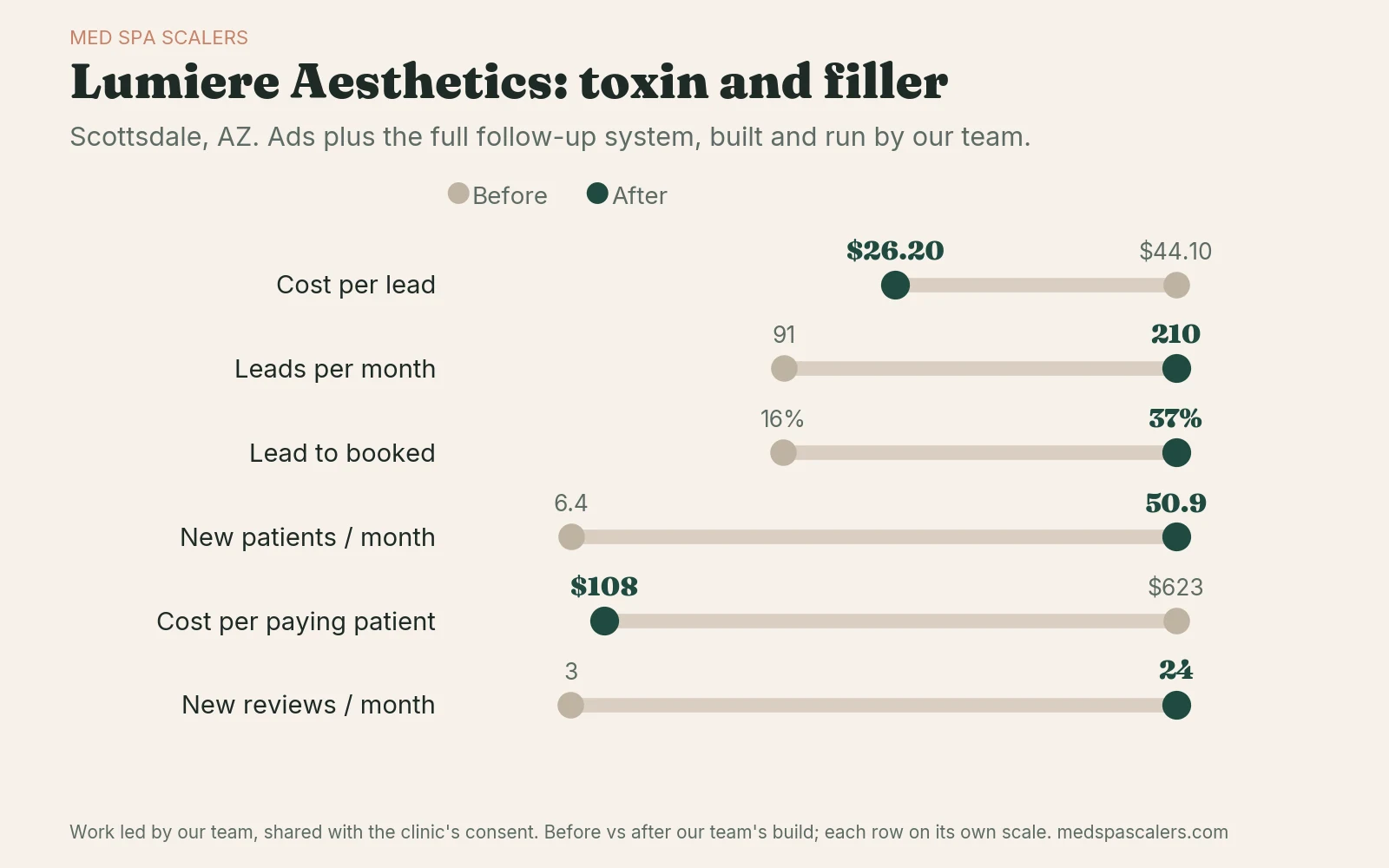
Lumiere Aesthetics, Scottsdale, AZ: toxin and filler
Lumiere is a toxin and filler clinic. Our team led the full stack: ads plus the full follow-up system. The numbers cover toxin and filler together, not filler alone. Shared with the clinic's consent.
The biggest change was response time: six hours to 38 seconds. Across our team's 186,400 leads at 128 clinics, replies under a minute booked 41%, against 9% after 4 to 24 hours.
See the speed-to-lead study for method.
How we build it
From audit to booked filler consults
Audit the filler funnel
We check where filler leads come from, how fast they get answered, how many book and what happens after the consult.
Build offers and follow-up
Our ads partner launches lip, cheek and full-face campaigns. We build the pages, AI receptionist and follow-up flows in GoHighLevel.
Run, refresh and report
Creative refreshes every two to three weeks. Monthly reports show booked consults, show rate and cost per patient.
The rules
Filler advertising rules, the short version
- Meta: ads for cosmetic procedures must target people 18 or older, and before-and-after images fall under that rule. Ads can't attack someone's appearance or body parts. See Meta's health and wellness ad policy.
- Google: Google restricts prescription drug terms in ads, landing pages and keywords. Check the Google Ads healthcare and medicines policy before using product names.
- FTC: testimonials must reflect real experience. If a result isn't typical, say what people can generally expect, and disclose connections such as staff or people given something of value. See the FTC endorsement guides FAQ.
- Photos and product names: get written patient consent before using any photo. Use names like Juvederm, Restylane or RHA only as plain product references.
This is a summary, not legal advice. Check your state medical board rules and your own counsel.
Where it fits
Filler marketing works as part of a system
The ads bring in the lead; follow-up decides whether they book. Our page on med spa Facebook ads covers Meta creative, and our med spa advertising page covers Google and budgets.
Fast replies, reminders and consult follow-up run inside your med spa CRM. Ranking for "lip filler near me" is a job for med spa SEO: treatment pages, Google Business Profile and reviews. In our team's data, each additional 100 reviews went with about 3.2 more top-3 local rankings (r = 0.61), and a review text, QR card and provider ask got 18.4% of patients to leave one (31 clinics).
Filler and toxin usually share a provider and a patient list, so we plan them with Botox marketing. Other lines can add laser hair removal marketing, body contouring marketing or semaglutide marketing.
As a med spa marketing agency, we run the ads, the AI receptionist and the follow-up together. Book a free audit to see where your filler leads drop off.
FAQ
Dermal filler marketing questions
What is dermal filler marketing?
Dermal filler marketing is the ads, search presence and follow-up that bring in filler patients and get them through a consult. For a med spa it usually means Meta and Google ads, treatment landing pages, fast lead response and a plan for people who consult but don't book on the day.
Are Meta ads or Google ads better for filler?
They do different jobs. Meta ads create demand with provider videos and clear offers. Google ads for fillers catch people already searching, such as "lip filler near me". We usually run both and judge them on cost per paying patient, not cost per lead.
Can I use before-and-after photos in filler ads?
Meta allows before-and-after images for cosmetic procedures when the ad targets people 18 and older, and it bans language that attacks someone's appearance. Use real patients with written consent and show typical results. Check your state rules too. This is a summary, not legal advice.
How do you turn Botox patients into filler patients?
We tag toxin patients in the CRM and offer a filler consult at the right moments: after a toxin visit, at rebooking and in reactivation campaigns. They already trust your injector, so the ask is a consult, not a sale.
How much does filler marketing cost?
It depends on your market, ad budget and what we build. We share exact pricing after a free audit.
See how many patients you're leaving on the table
Get a free marketing audit of your ads, follow-up and booking flow. No pressure, just a clear picture.
Book a free marketing audit