Microneedling marketing for med spas
Microneedling marketing that sells the series, not one session
Microneedling marketing works when the consult ends with a full series on the calendar and every unsold attendee gets followed up. We run the ads, answer every lead in seconds and build the consult, series and rebooking flows in GoHighLevel, for standard and RF microneedling.
Microneedling and RF, across the clinics our team measured
Median cost per paying microneedling or RF patient from Meta ads, after follow-up was fixed
Unsold consult attendees who bought within 30 days, after consult follow-up (42 clinics)
Median 90-day return on microneedling and RF ad spend
The problem
Microneedling is sold at the consult, and most marketing stops before it
Most microneedling results come from more than one session. The FDA's own patient guidance says you may need more than one procedure. So the sale is a series, decided at a consult, and the revenue depends on what happens after the first visit. Most microneedling marketing advice stops at the lead: post before-and-afters, run a seasonal promo, get active on social.
"Let me think about it"
In our team's data, 30% of microneedling and RF patients who showed up didn't pay. Without a follow-up, that consult is gone. Across 42 clinics, only 8% of unsold attendees bought within 30 days when nobody followed up.
Series stall after session one
If the next session isn't booked before the patient leaves, it depends on them remembering. Many don't, and the series stops before the result your provider planned.
Researched buyers go elsewhere
People compare microneedling, RF and lasers before they book. Across 186,400 leads in our team's data, leads answered in under a minute booked at 41%. After 4 to 24 hours, it was 9%. In a survey of 2,310 lost leads, 52% booked elsewhere within 7 days.
Our microneedling data
How microneedling and RF ads perform once follow-up is fixed
Microneedling and RF took 6% of Meta ad spend across the clinics our team tracked. Here is the median microneedling and RF campaign after follow-up was fixed, next to the median across all treatments.
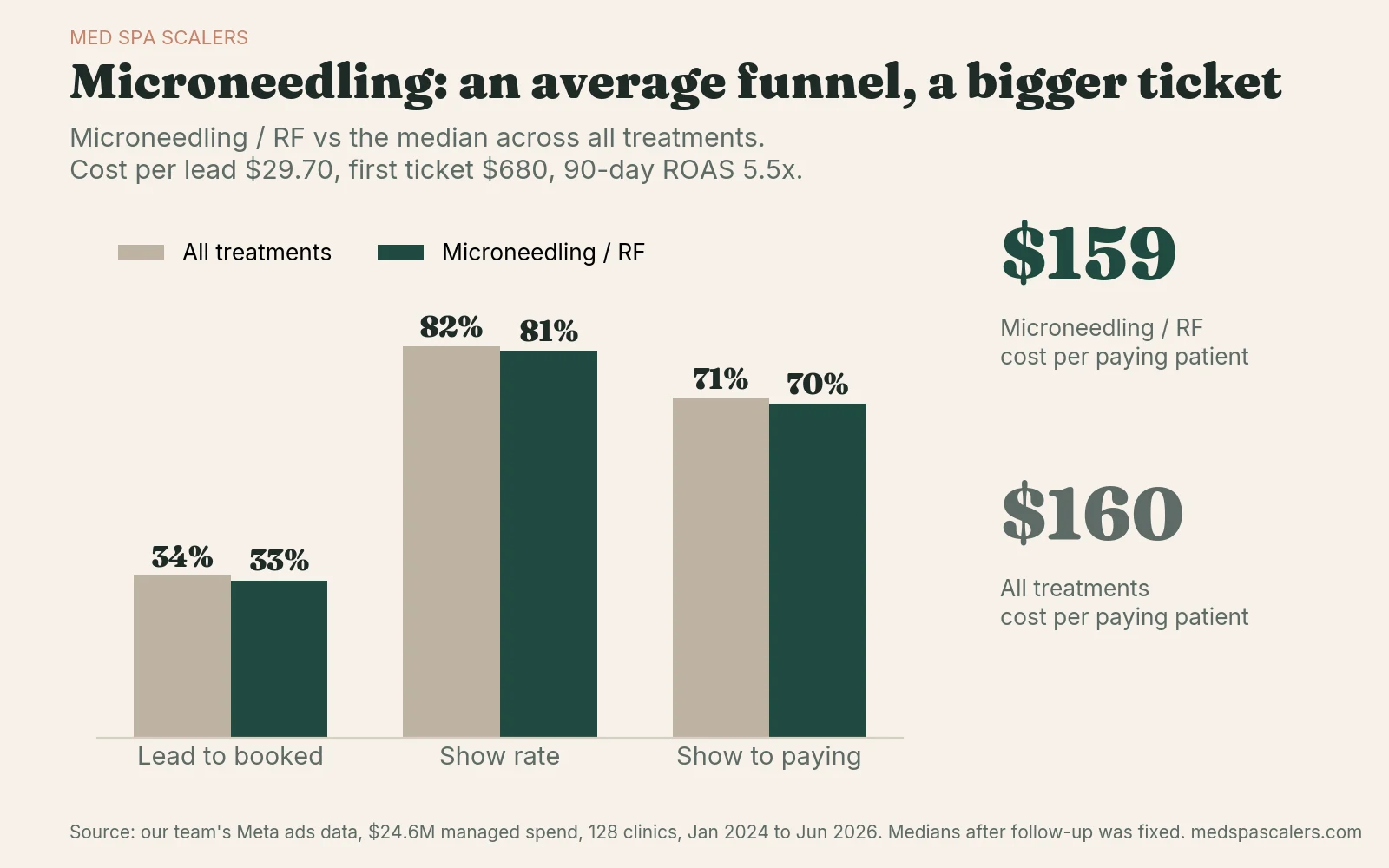
Microneedling and RF sit almost exactly on the median. The median first ticket was $680. Getting the lead is not the hard part. The gains come after it: turning more consults into a series, and getting each patient through every session.
Methodology: before = a clinic's first 90 days, after = months 4 to 6. Figures are medians across clinics, January 2024 to June 2026. Full method and limitations are in our med spa speed-to-lead study.
The playbook
What we build for microneedling and RF
Present the series at the consult
Your provider sets the number of sessions and the spacing. We build the consult flow so the full series is the default option, with package choices you define. Taking a deposit or card on file lifted show rate from 74% to 87% across 29 clinics.
Follow up every unsold consult
Attendees who don't buy get a short sequence: answers to the questions they raised, a note from the provider and an easy way to book. Across 42 clinics, buying within 30 days went from 8% to 21%. Median added revenue was $18,900, from about 3 hours of setup.
Book the next session before they leave
Session two goes on the calendar at checkout, and reminders follow the schedule your provider set. Treatment-cycle rebooking lifted on-schedule returns from 41% to 63% across 49 clinics.
Protect every session
Reminders at 72 hours, 24 hours and 2 hours, confirmed by reply, lifted show rate from 61% to 78% (77 clinics). No-show recovery raised rebooking within 14 days from 9% to 38% (54 clinics). More on reducing med spa no-shows.
Qualify and answer fast
Instant forms with 3 qualifying questions lifted booked rate from 14% to 31%. A landing page with a booking calendar beat a form-only page, 37% to 22%. Leads who don't book enter a 7-touch, 14-day nurture, which lifted later bookings from 4% to 15% (72 clinics).
Show the provider, skip deep discounts
Provider-on-camera and UGC ads cut cost per lead from $46.10 to $29.80 against polished stock. Deep discounts cut cost per lead by 12% in our team's data, but close rate fell 9 points and repeat rate fell 14 points. A series needs patients who come back.
How we build it
From audit to finished series
Audit the consult and the series
We check cost per lead, response time, consult close rate and how many patients finish the series they started. That shows whether the gap is ads, the consult or retention.
Build the follow-up in GoHighLevel
Instant text and call, consult follow-up, checkout rebooking, session reminders and no-show recovery. After hours, an AI receptionist for your med spa answers and books.
Launch ads and report
Our ads partner runs Meta and Google campaigns with provider creative and qualifying questions. You get a monthly report on booked consults, series sold and sessions completed.
Case study
Serenity Face & Body: keeping patients on their treatment cycle
Serenity Face & Body is a face and body clinic in Columbus, Ohio. Our team built the follow-up system only, with no ads. The results are clinic-wide, not specific to microneedling. This was work led by our team, shared with the clinic's consent.
The same rebooking logic runs a microneedling series: the next visit is booked before the patient leaves, and reminders follow the provider's schedule.
Where it fits
Microneedling marketing works best as part of one system
A facial patient who already trusts your provider is an easy person to offer microneedling. We pair this system with Hydrafacial marketing so facial patients get offered the next step. Laser clinics sell series too, and our laser hair removal marketing page covers how we keep those packages on schedule.
The nurture and consult follow-up emails are covered in our guide to med spa email marketing. Rebooking, reminders and reactivation all live in your med spa CRM. For campaign setup and creative, see how we run med spa Facebook ads.
As a med spa marketing agency, we run the ads and the follow-up together, and we report on booked consults and finished series, not clicks.
Compliance
Microneedling advertising rules to know
- Meta's health and wellness policy names micro-needling among cosmetic procedures. Ads must target people 18 and older and can't contain statements of inferiority about physical appearance. Before-and-after images are allowed only with 18+ targeting.
- The FDA regulates most microneedling products as medical devices. Per the FDA's microneedling devices page, authorized uses cover improving the appearance of facial acne scars, facial wrinkles and abdominal scars in patients 22 or older. The FDA states the devices are not approved for delivering cosmetics, topical medications or platelet-rich plasma. Don't claim a clearance your device doesn't have.
- In October 2025 the FDA issued a safety communication on RF microneedling, citing reports of burns, scarring, fat loss, disfigurement and nerve damage. It calls RF microneedling a medical procedure, not a cosmetic treatment. Keep RF ads free of "no risk" or "no downtime" promises.
- Morpheus8 is a brand owned by InMode. Use device names only for devices you actually own, and don't imply a partnership you don't have.
- Only use patient photos and reviews with consent, and avoid guaranteed results.
This is a summary, not legal advice. Check your ads with your medical director or compliance advisor.
FAQ
Microneedling marketing questions
What is microneedling marketing?
Microneedling marketing is how a med spa attracts and keeps microneedling patients: ads and local search to bring in consults, fast follow-up to book them, and a system that sells the full series and keeps each patient on schedule.
How do you market RF microneedling or Morpheus8?
The same way as standard microneedling, with more care on claims. Use the device name only if you own that device, show your provider, and avoid promises about risk or downtime. In our team's data, microneedling and RF ads had a median cost per paying patient of $159.
How do you get patients to finish a microneedling series?
Book the next session before the patient leaves, then send reminders on the schedule your provider sets. Across 49 clinics, treatment-cycle rebooking lifted on-schedule returns from 41% to 63%.
Can I advertise microneedling on Facebook and Instagram?
Yes, within Meta's rules. Meta names micro-needling as a cosmetic procedure, so ads must target people 18 and older and can't make negative statements about how someone looks. Before-and-after images need 18+ targeting and patient consent.
How much does microneedling marketing cost?
It depends on your market, ad budget and which parts of the system you need. We share exact pricing after a free audit.
See how many patients you're leaving on the table
Get a free marketing audit of your ads, follow-up and booking flow. No pressure, just a clear picture.
Book a free marketing audit