Local SEO Backlinks: How to Earn Them Without Penalties
A med spa can spend months collecting directory listings and still wonder why nearby patients see competitors in local search. The problem usually isn't a shortage of links. It's that many of those links don't tell Google, or prospective patients, why the clinic belongs in that place and specialty.
Local SEO backlinks work best when they come from credible local sources and connect to useful clinic information. The practical test isn't just whether a link improves a ranking. It's whether the reference helps the right patients find the clinic and book.
Table of Contents
Local Link Sources Ranked by Relevance
A Semrush comparison found that businesses appearing in Google's Local Map Pack had an average of 993 backlinks from 216 referring domains. That's a historical average, not a ranking threshold or a promise that collecting a similar number will get a clinic into the Map Pack. Google considers relevance, distance, and prominence, and backlinks are only one part of prominence. The Semrush-based local SEO benchmark is useful as context for the size of some link profiles, not as a target to chase.
| Source type | Local signal it sends | How to earn it | Risk |
|---|---|---|---|
| Local newspaper or TV station | Strong civic and geographic trust | Offer an expert quote, local data story, or event coverage | Low |
| Chamber of commerce or business association | Confirms the business is a real local operator | Join, then contribute a member profile or event listing | Low |
| Medical or aesthetics association chapter | Clinical credibility | Offer a clinician bio, speaking slot, or clinician-reviewed guide | Low |
| Charity or nonprofit event page | Community participation | Sponsor an event and agree on a written listing | Medium, check for paid placement |
| Neighborhood blog or local magazine | Neighborhood relevance | Contribute a useful local guide or expert piece | Medium |
| Complementary local business, such as a dental office, gym, or salon | Shared local audience | Co-host an event or build a joint resource page | Medium, avoid reciprocal swaps |
| Generic directory bundle | Little local meaning | Submit only to a directory that serves the area and its residents | High |
| Sitewide footer or forum link | No meaningful local signal | Don't pursue unsolicited placements | High |
The strongest prospects connect the place and the clinical topic. A city newspaper covering local skin health can give a clinic a clearer local context than a generic national site, even if the national site has a stronger authority score. The link should also point to a relevant page, such as a treatment guide or location page, rather than automatically going to the homepage.
A useful filter: Would a local patient plausibly read this page and consider the clinic more relevant or trustworthy?
List ten live prospects and mark each for local relevance, clinical relevance, and risk. Keep the three strongest source types as the quarter's focus, and build that work alongside accurate business details, treatment pages, reviews, and a complete Google Business Profile. For a broader local search foundation, review this med spa SEO overview.
Build a Linkable Asset Local Editors Will Cite
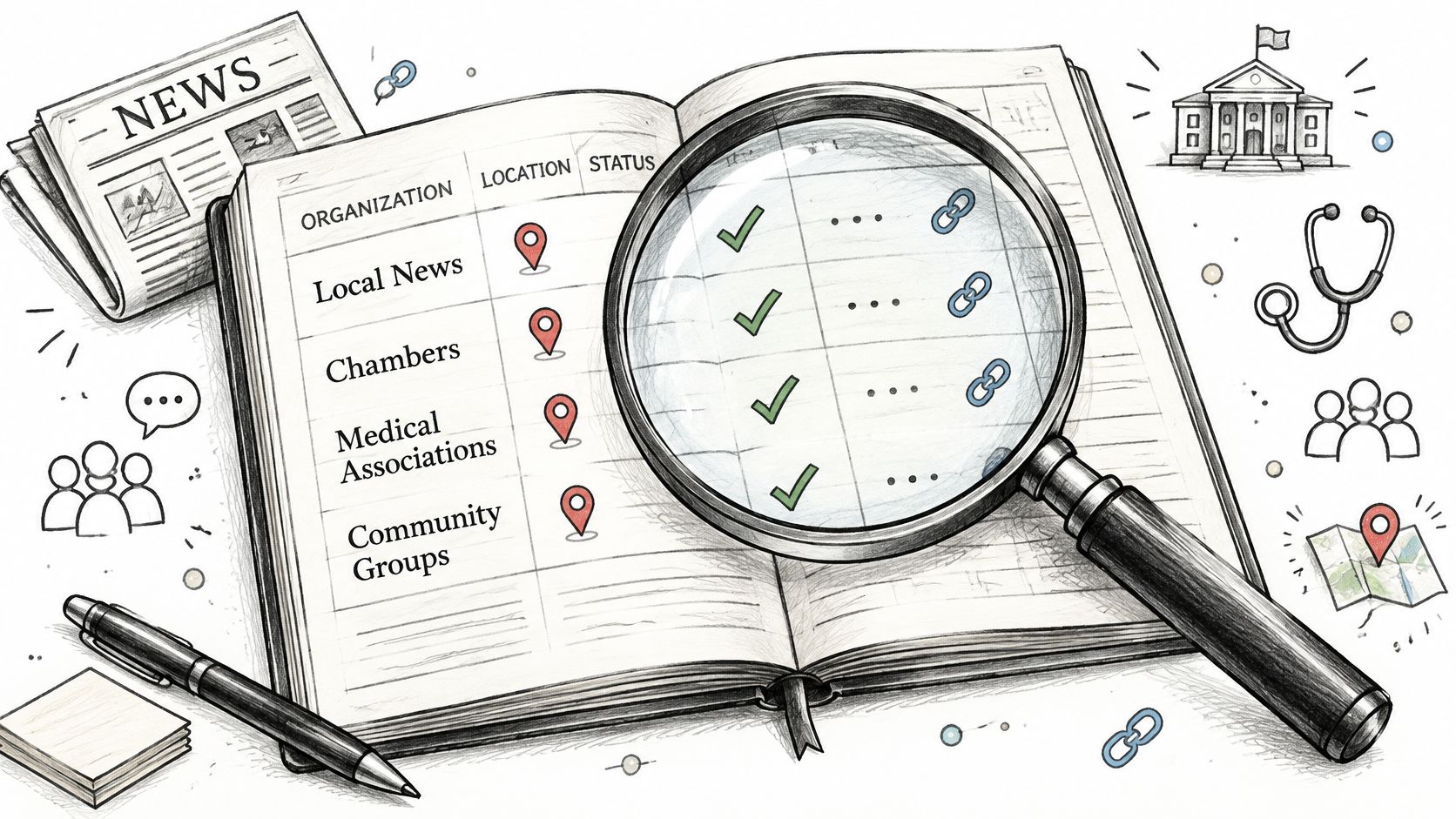
Start with a prospect inventory, not an email blast. Use a backlink tool to review competitors' referring domains, then sort the prospects into local news, chambers, medical associations, community organizations, relevant vendors, charity events, and treatment publications. The point isn't to copy a competitor's link profile. It's to find organizations that already cover local health, community events, or aesthetics.
Build one asset that gives an editor a specific reason to cite the clinic. A locally segmented skin-health survey can answer questions about sun exposure or aftercare. An evidence-based laser safety guide can help readers understand what to ask before treatment. A seasonal wellness checklist can support a neighborhood fundraiser or public event.
Make the asset credible and easy to use
Before outreach, check that the asset has:
- A named clinician author with relevant credentials.
- A visible publish date so readers can tell when it was prepared.
- Cited sources for clinical claims.
- Local context, such as city-level findings when the material supports them.
- A clean downloadable version that an editor can share or link to.
These details make it easier for a reporter or community organizer to assess the material quickly. Avoid turning the asset into a treatment advertisement. Editors need something useful to their audience, not a disguised service page.
Next, map each prospect to an editorial reason. For example, a health reporter who covers local sun safety each spring may be a fit for a clinician-reviewed guide, while a chamber may be more interested in a member profile or event resource. The local link-building workflow recommends matching each prospect to a specific reason to cite the asset, then tracking the response, placement, indexation, referral activity, and consultation outcomes.
Keep a simple working sheet with three columns: prospect, editorial reason, and asset. Add the contact and placement status as the list develops. For clinics that need to connect inquiries to follow-up, a speed-to-lead measurement guide can help clarify how quickly new prospects should receive a response.
Community Partnerships and When an Unlinked Mention Is Enough
More links aren't automatically better. A 2025 analysis of more than 1 million Local Pack ranking points across 10 industries and 10 U.S. cities found that stronger performers tended to have more links per referring domain and more diverse linking domains, while spammy one-off link footprints underperformed. That association doesn't prove that links caused rankings, but it does challenge the idea that bulk directory submissions can make up for weak local credibility.
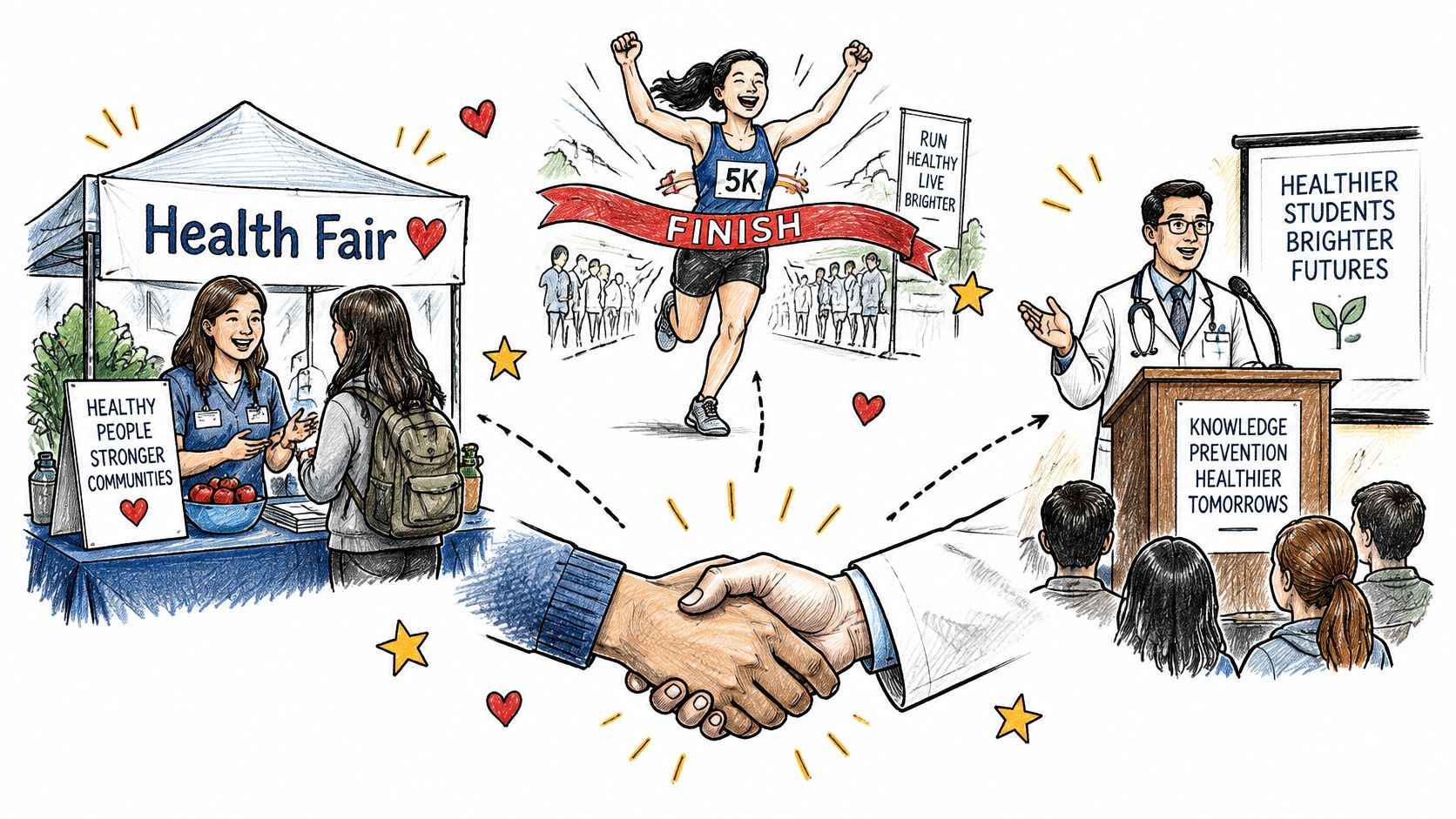
Useful partnerships can take different forms: sponsor a charity 5K or school health fair with an agreed event-page listing, co-host a seminar with a dermatology or OB-GYN practice, create a joint resource with a complementary business, or participate actively in a chamber and medical association. A sponsorship should offer a real community benefit, not just a logo placement.
A local newspaper article, chamber profile, or nonprofit event page can still be valuable when it mentions the clinic without a followed link. The name, location, and services appear in a real community context, which can support local recognition and referrals. Pursue that mention if it's editorial and relevant. Skip it if the only route is paying for a link.
| Criterion | High score looks like | Low score looks like |
|---|---|---|
| Local relevance | Site covers the clinic's city or neighborhood | National site with no regional focus |
| Topical relevance | Content touches aesthetics, dermatology, or general health | Unrelated trade or lifestyle site |
| Editorial legitimacy | An editor chose to cite the clinic | Link bought, traded, or handed out |
| Referral potential | Live, indexed page that readers actually visit | Dead page or sitewide footer |
| Risk | No paid or reciprocal terms attached | Bulk, paid, or reciprocal placement |
For example, a local health fair sponsorship with a useful listing can score high on place, audience, and legitimacy, with low risk if the listing isn't conditional on a followed link. A generic directory bundle scores poorly when it has little connection to the city or patient needs. Use the scoring criteria before outreach, then favor opportunities strong in both local relevance and editorial legitimacy.
Safe Link Rules That Keep Your Site Out of Trouble
Before pitching or agreeing to a sponsorship, check the page where the clinic would appear. A sound placement is editorially earned through expertise, data, community participation, or legitimate sponsorship. Don't buy, trade, or hand out a link in exchange for a placement.
- Check indexability. Confirm the page can be indexed and is live.
- Check relevance. It should connect to the clinic's city, treatment, or health specialty.
- Check placement. Avoid sitewide templates such as footers and sidebars.
- Check outbound links. A page crowded with commercial links is a poor fit.
Use natural anchors such as the clinic's name, a treatment name, or a neutral phrase. Don't repeatedly push exact-match wording like “best Botox clinic [city],” even if someone offers to use it. Google's spam policies for web search identify buying or selling links, excessive reciprocal exchanges, automated link creation, and links obtained in exchange for goods or services as link spam. For paid sponsorships, gifted arrangements, or contractual placements, ask the publisher to use rel="sponsored" or rel="nofollow" where appropriate.
| Pattern | Safe approach | Risky version |
|---|---|---|
| Sponsorship link | Request a sponsored or nofollow attribute from the publisher | Followed sponsor link with a keyword anchor |
| Anchor text | Clinic name, treatment name, or neutral phrase | Repeated exact-match phrase such as “best Botox clinic” plus a city |
| Link exchange | Relevant editorial link with no agreement attached | Reciprocal link pact between clinics or sites |
| Guest post | Editor-chosen article on a relevant local or health site | Mass guest posts on unrelated sites |
| Directory listing | Established local directory with accurate details | Bulk submission to low-quality directories |
| Link placement | Contextual link inside article body | Footer, sidebar widget, or forum signature |
| Gifted treatment | Disclosed review or mention without a required link | Free treatment exchanged for a link |
For a multi-location group, send each link to the correct location or treatment page. A single homepage destination can blur the local connection and make it harder to identify which market generated a patient.
How to Pitch Local Editors and Partners
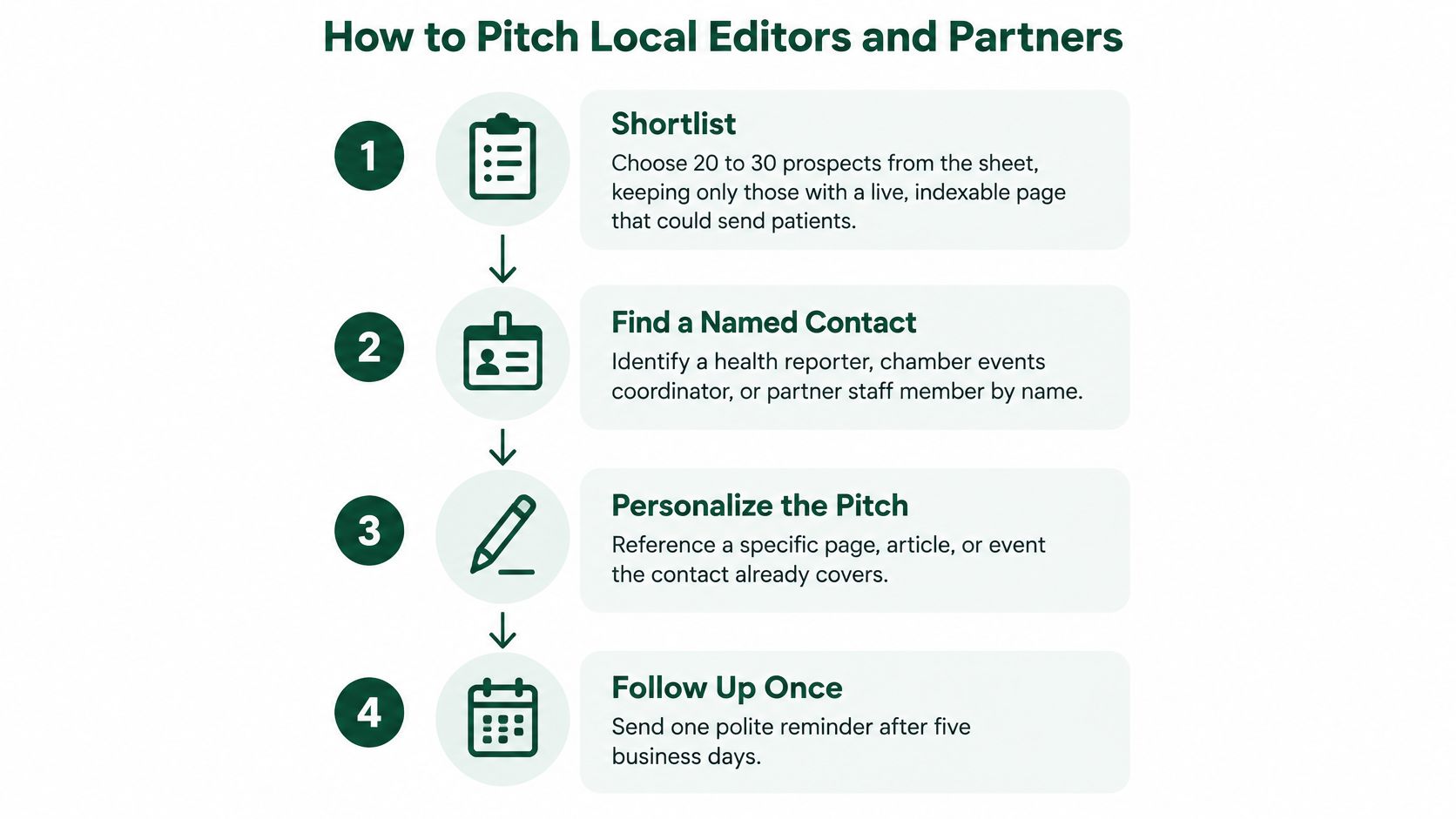
Shortlist prospects. Choose 20 to 30 names from the working sheet, keeping only those with a live, indexable page that could plausibly send patients. A large list of irrelevant contacts adds work without improving the odds of a useful placement.
Find a named contact. Look for a health reporter, program coordinator, chamber membership director, or partner staff member. A personal, relevant pitch is more likely to reach someone who can assess the idea than a generic message to an organization's main inbox.
Write a concise subject line. Include the city and specialty, such as “Sun safety data for [city] readers.” Keep it under eight words and make the topic clear before the recipient opens the email.
Lead with the editorial reason. Use the first two sentences to name the page, audience, or event you're responding to and explain what the asset offers. For example, point to a publication's local sun-safety coverage and offer a clinician-reviewed guide or local findings that its readers can use.
Offer an alternative. If the editor doesn't need the asset, offer a clinician quote or interview slot. That gives them another way to use the clinic's expertise without asking them to publish a promotional piece.
Follow up once. Send one polite reminder about a week later, then stop. Repeated messages can turn a relevant pitch into unwanted pressure.
Verify and record the placement. After publication, confirm the mention is live, contextual, and indexed. Log the response, placement, indexation, referral sessions, and bookings in the CRM so the clinic can judge more than the link count.
Editors reject pitches that read like ads. A sponsor request without a clear public benefit usually gets ignored, too. Make the usefulness obvious and keep the clinic's promotional language out of the lead.
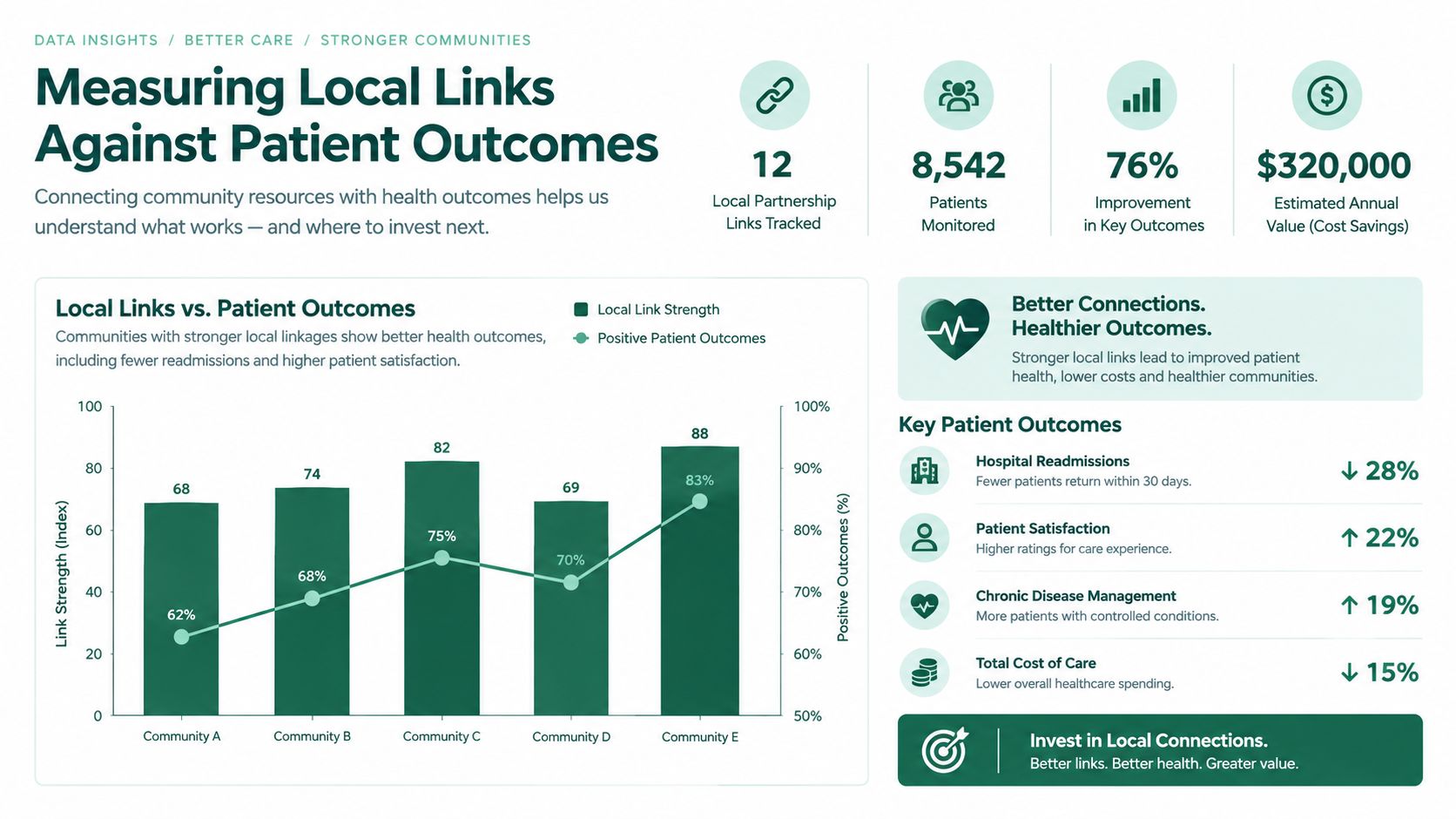
Measuring Local Links Against Patient Outcomes
A clinic needs to separate three results that often get blended together: appearing in local organic results, entering the Google Map Pack, and generating booked consultations. A strong backlink can't overcome a searcher's distance from the clinic or an incomplete Google Business Profile. A review of Google Maps ranking factors notes an association between stronger Map Pack performance and greater linking-domain diversity, but that doesn't prove a new link will cause a ranking gain or produce appointments.
| Metric | What it tells you | Where to check |
|---|---|---|
| Referring-domain quality | Whether the linking site is local and clinically relevant | Backlink tool or Search Console links report |
| Indexed-link retention | Whether the link is still live and indexed at 90 days | Backlink tool recrawl |
| Organic impressions for treatment-plus-city queries | Visibility growth in the service area | Search Console, filtered by query |
| Branded search growth | Whether local awareness is rising | Search Console, branded queries |
| Qualified referral visits | Traffic from the link that could book | Analytics landing-page and referral reports |
| Consultation bookings by source | Whether the placement produces patients | CRM source tag |
| Kept-appointment rate | Whether referred patients actually attend | CRM or booking system |
| Revenue per placement | Return on the time spent on outreach | CRM attribution by source |
Group placements by the month they were earned and review each cohort after 90 days. Check whether the page remains indexed, whether visits came through, and whether those visits led to consultations and kept appointments. Drop sources that produce links but no meaningful referral activity.
For multi-location clinics, point each placement to the correct location or treatment page, tag the market, and report results separately. Vendor averages and ranking-factor percentages can help frame a hypothesis, but they aren't causal proof. Judge the program by booked consultations and kept appointments first, using ranking movement as supporting context. A local SEO audit guide can help identify profile, page, and conversion issues that may be limiting results alongside link work.
Confirm Your First Three Local Targets This Month
Choose one news or media contact, one chamber or medical association chapter, and one community or complementary business partner. Write the editorial reason beside each name, such as a reporter's seasonal sun-safety coverage or a chamber's member profile page.
Decide whether an existing guide, treatment page, or clinician bio is strong enough to pitch. If not, assign a clinician to create a skin-health survey or laser safety guide, and set a publication date.
Set up the 90-day tracking sheet with a CRM source tag, referral-visit reporting, and an indexed-link check. Assign an owner to each target, asset, and tracking task, then book the first review for day 90. Keep the source types that produce relevant visits and bookings; drop those that deliver links without patient activity.
Med Spa Scalers helps medical spas connect local SEO with booking-focused marketing, including treatment-specific visibility, CRM follow-up, and consultation tracking. If you want to measure local link activity against actual patient outcomes, visit Med Spa Scalers.
See how many patients you're leaving on the table
Get a free marketing audit of your ads, follow-up and booking flow. No pressure, just a clear picture.
Book a free marketing audit