Consult or Consultation: Which Word to Use and When
Consult is the verb meaning to seek advice or confer with someone; consultation is the noun for the meeting itself, while consult is also accepted as a short noun in marketing copy such as a free consult. But if both words can describe the same appointment, why might a client wonder whether they booked the right thing?
The problem isn't always grammar. A prospect might click an ad for a skin consult, select an assessment in the booking form, and receive a consultation reminder. Each label may sound reasonable on its own, but together they leave the client to work out whether they're equivalent.
Table of Contents
- Consult vs Consultation at a Glance
- How to Test Which Word Fits a Sentence
- Formal and Casual Register in Client Materials
- Appointment Offers and Promotions
- Booking Pages and Calendar Labels
- Client Communications and Reminders
- Choose One Term and Lock It Across Channels
Consult vs Consultation at a Glance
Consult describes the action; consultation names the meeting. That distinction works across clinical advice, treatment discussions, and ordinary business writing.
| Feature | Consult | Consultation |
|---|---|---|
| Part of speech | Verb; informal noun in marketing copy | Noun only |
| Core meaning | To seek advice from or confer with someone | The meeting or session itself |
| Typical sentence | You should consult your doctor before treatment. | Your consultation is booked for Tuesday afternoon. |
| Common booking phrasing | Book a free consult | Book your consultation |
| Preposition pattern | Consult someone; consult with someone; consult on a topic | Consultation with, consultation on, consultation for |
| Plural form | Consults, a verb form or plural noun | Consultations |
| Best-fit channel | Ads, short buttons, casual speech | Booking pages, confirmations, calendar entries, clinical records |
The exception is consult as an informal noun. In aesthetics and wellness copy, a free consult is understandable shorthand, not a verb used incorrectly. It has a more conversational tone than a complimentary consultation.
Use the sentence's purpose to decide. Consult your clinician about treatment options describes seeking advice. Your consultation includes a discussion of treatment options names an event and explains its contents.
Consultation doesn't necessarily mean a physical appointment, either. A virtual meeting can still be a consultation.
How to Test Which Word Fits a Sentence
Use these checks when you're editing a sentence rather than naming a service.
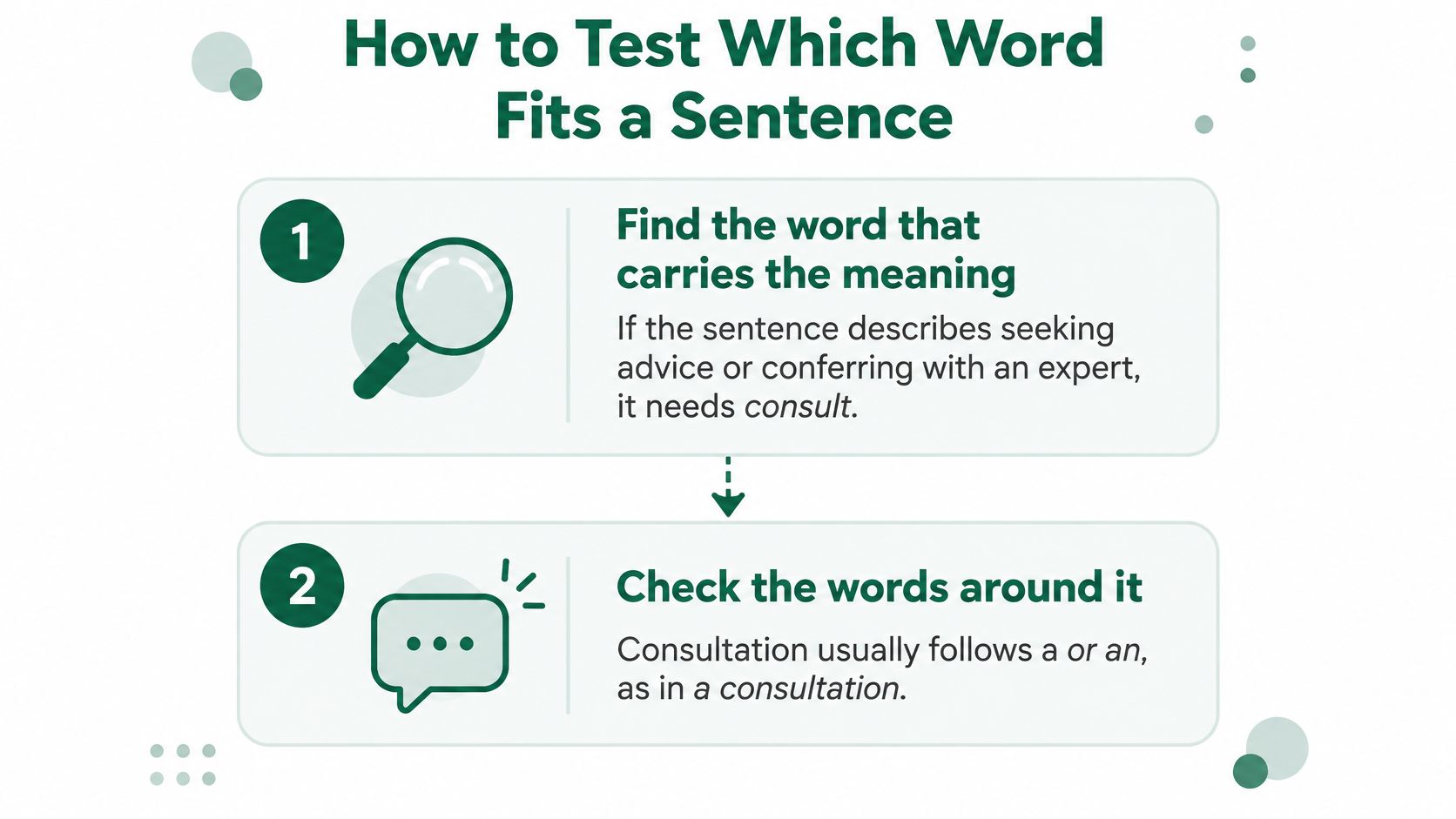
Find the action. Is someone seeking advice or conferring with an expert? Use consult because the sentence needs a verb.
Check the surrounding words. A, the, and your often introduce a noun, as in your consultation. They can also introduce the informal noun consult, so this check identifies the grammatical role, not necessarily the register.
Try the advice test. Replace the expression with ask an expert for advice, adjusting the sentence naturally. If the meaning holds, consult is probably the right verb.
Try the meeting test. Substitute appointment or session. If that works, consultation is the clearer full-form noun.
Inspect the ending. Consultations is a plural noun. Consults needs context: in she consults a specialist, it's a verb; in booked consults, it's a plural noun.
Choose the level of formality. Book a free consult is acceptable promotional shorthand. For an appointment explanation or clinical record, prefer consultation.
Worked examples: Consult your surgeon before treatment passes the advice test. Your consultation includes a skin assessment passes the meeting test.
Neither consultation your surgeon nor your consultate works. The words aren't interchangeable forms that fit every grammatical position.
Formal and Casual Register in Client Materials
A prospect comparing clinics may read free consult as an approachable first step. The shorter wording can suit someone who's browsing options and isn't ready to discuss a treatment plan.
A booked patient has different questions: Who will I meet? What will happen? Do I need to prepare? Consultation gives that event a more formal name, although the word alone doesn't explain its scope.
A clinic isn't wrong to use a casual term early and a formal term later. But without an explicit connection, a client may wonder whether the names describe different appointments.
Say a prospect clicks Explore a Laser Consult. The landing page can connect the terms naturally: Your laser consultation is an opportunity to discuss your goals, suitability, and treatment options.
People researching injectables, lasers, or body contouring may welcome clinical language rather than sales shorthand. Don't assume a friendly tone requires abbreviated terminology.
Match the register to the reader's decision stage, not just the channel. A social post explaining treatment suitability may need more formal wording than a short booking button.
Appointment Offers and Promotions
Promotional copy can use consult for brevity, while the destination page uses consultation to explain the offer. The wording can expand; the promise must stay the same.
These are illustrative lines, not offers to publish without checking the clinic's actual terms.
| Offer type | Word to use | Example line |
|---|---|---|
| Paid social ad | Consult | Free Botox Consult This Month |
| Search ad headline | Consult | Laser Skin Consult, Book Today |
| Promotional landing page hero | Consultation | Complimentary Consultation for New Patients |
| Seasonal offer email | Consultation | Your Complimentary Consultation Expires Friday |
| Referral offer | Consult | Refer a Friend and Both Get a Free Consult |
| Membership or package offer | Consultation | Membership Includes a Quarterly Consultation |
| Pricing page | Consultation | Consultation Fee Credited Toward Your Treatment |
Suppose a clinic offers a complimentary consultation with a clinician. The landing page should explain whether that includes a clinical examination, photographs, or only a discussion. If there's a consultation fee instead, state whether it's credited toward treatment and what conditions apply.
Don't let free consult imply free treatment, guaranteed suitability, or an examination that isn't included. Likewise, use expiry language only when the offer genuinely has an expiry.
Ad space may favor the shorter word, but the landing page's opening sentence should restate the same offer using the full term. Clear inclusions matter more than punchy phrasing.
Booking Pages and Calendar Labels
Start at the button and follow the booking path as a client would. Book a Consult can work as a compact label, provided the next screen explicitly identifies the same service, such as Your Skin Consult, Consultation Details.
Use consultation for the service selector, booking-page title, appointment-type field, and calendar record. Keep personal-information fields literal: Name and Phone number don't need appointment terminology added.
For a hypothetical calendar entry, Consultation, Lip Filler, clinician review tells staff more than Consult. Add the actual duration from the clinic's appointment configuration, not a marketing estimate.
Calendar check: An entry named only Consult gives the team no preparation detail. A service-specific consultation entry tells staff which discussion they're preparing for.
Review the information carried into the appointment:
- Service name: Identify the treatment being discussed, not a treatment already promised.
- Duration: Match the scheduled slot.
- Location: Specify the branch or virtual format.
- Provider: Name the clinician or appropriate team member.
- Payment status: Distinguish complimentary and paid consultations.
If an AI receptionist for a med spa handles booking conversations, give it these same service names. Test the confirmation screen and calendar integration too, so that neither one replaces a service name with a vague internal abbreviation without anyone noticing.
Client Communications and Reminders
Keep the appointment name stable within each conversation. Use consultation in formal messages; reserve consult for a short text thread that already uses that term.
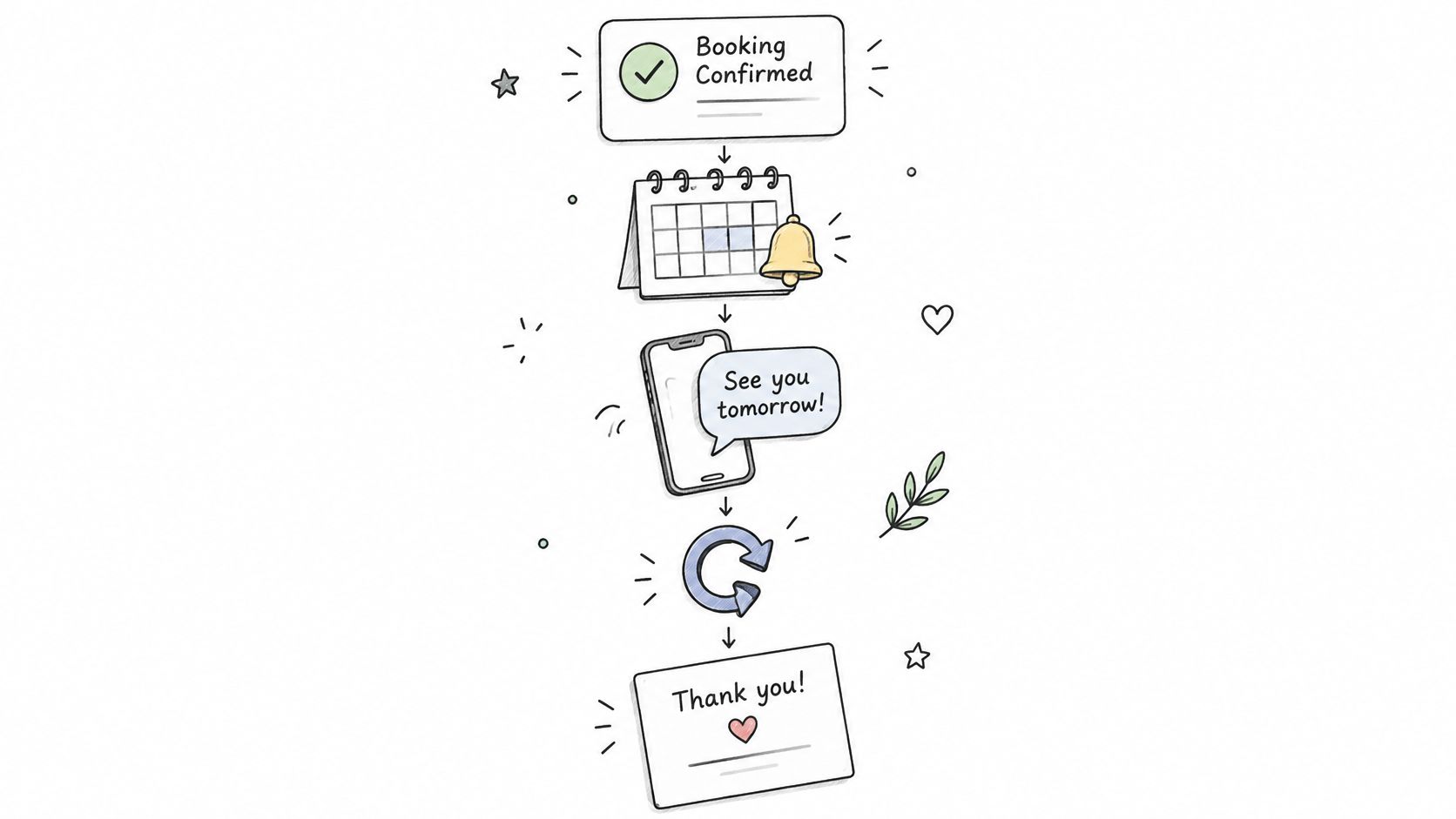
A practical sequence can use these model lines:
- Booking confirmation: Your consultation with our nurse practitioner is booked for Tuesday afternoon.
- Advance reminder: Your consultation is approaching. Please review your preparation instructions.
- Day-before text: Your consultation is tomorrow. Reply R if you need another time.
- Rescheduling response: We can help you move your appointment. Would morning or afternoon suit you?
- Post-visit follow-up: Thank you for attending your consultation. Please contact us with questions about your treatment plan.
A systematic review in BMJ Open found that electronic reminders increased clinic attendance from 54% to 67%, with multiple notifications outperforming a single reminder. That's general healthcare evidence, not a med spa forecast.
A randomized outpatient study found no-show rates of 13.6% with staff telephone reminders, 17.3% with automated reminders, and 23.1% without reminders. Route unconfirmed appointments and uncertain replies to a front-desk team member rather than relying entirely on automation.
Make rescheduling genuinely two-way. MGMA's discussion of patient no-shows identifies non-replyable reminders and portal friction as continuing barriers.
Evaluate reminders alongside the initial inquiry response, using a med spa speed-to-lead study to frame that separate operational review. Track cancellations, reschedules, and no-shows separately rather than treating every changed appointment as a failure.
Choose One Term and Lock It Across Channels
Set a house rule: consultation is the canonical appointment name; consult is permitted shorthand. Record approved exceptions so staff don't have to make fresh decisions every time they edit a template.
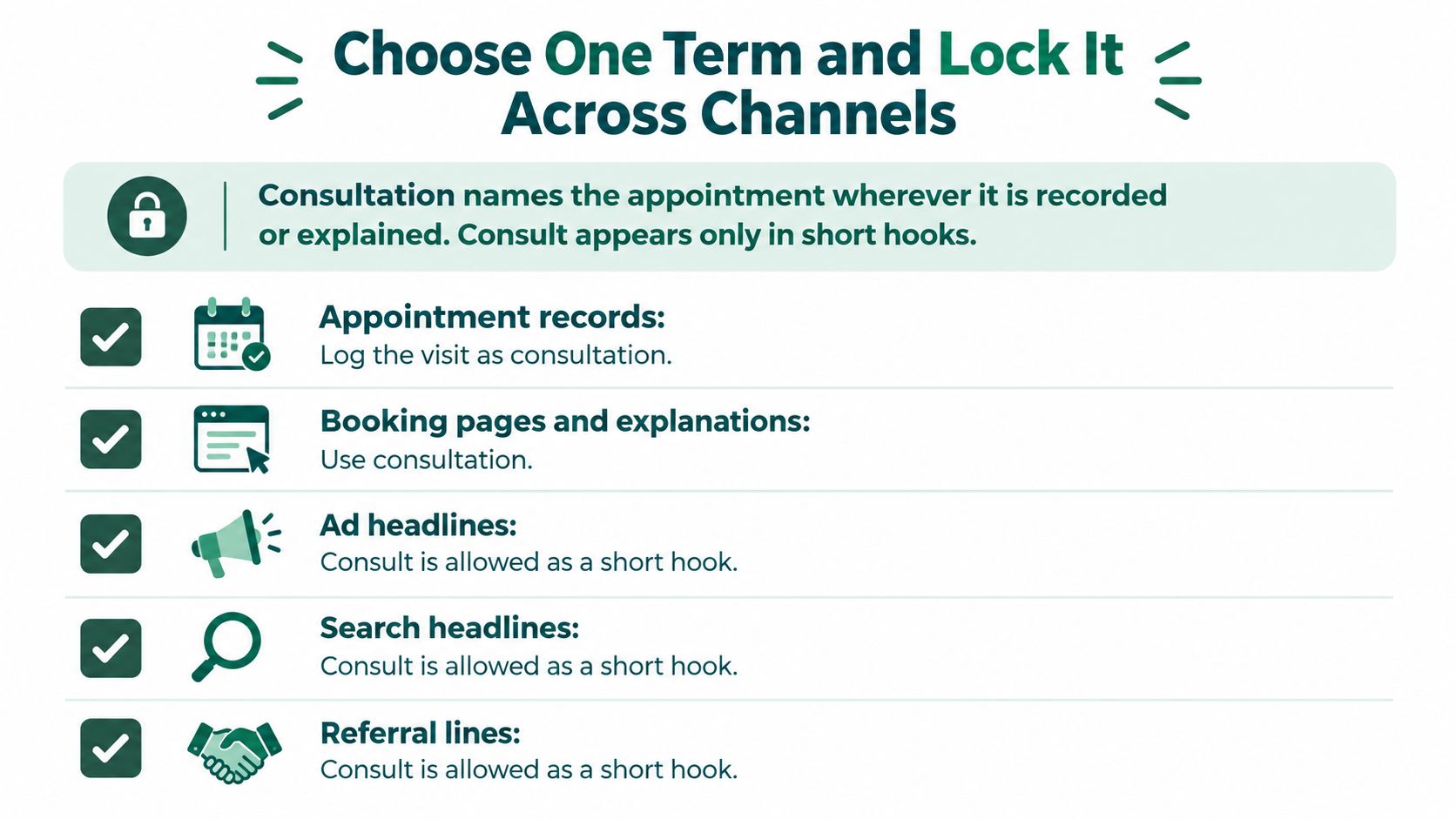
Build a shared terminology sheet containing:
- Canonical term: Consultation, with capitalization matching the page or field's style.
- Permitted shorthand: Consult in approved promotional hooks and buttons.
- Offer pairing: Each live ad line and its matching landing-page sentence.
- Calendar format: Consultation, service, actual duration.
- Message templates: Approved confirmation, reminder, and rescheduling language, including the reply keyword.
- Review requirement: Check new offers and templates before launch.
Assign an owner to update the sheet whenever services or offers change. Apply it inside the med spa CRM, not just in a document that staff rarely open.
When deciding between consult or consultation, the final check is practical: can the client and the team identify exactly the same appointment?
Med Spa Scalers connects med spa advertising, booking pages, CRM automation, AI reception, and appointment follow-up. Visit Med Spa Scalers to request an audit of your inquiry-to-appointment journey and identify where unclear labels or disconnected messages need attention.
See how many patients you're leaving on the table
Get a free marketing audit of your ads, follow-up and booking flow. No pressure, just a clear picture.
Book a free marketing audit